
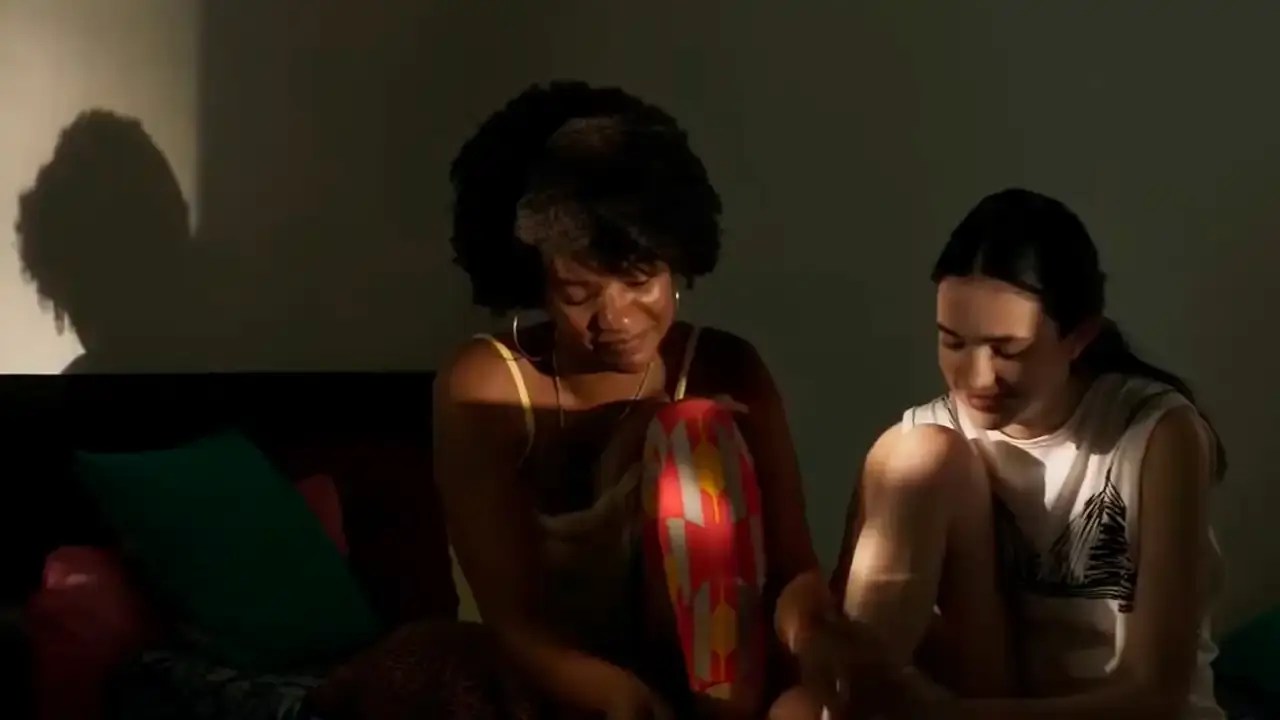
Class differences, a central theme in Carajita (Silvina Schnicer & Ulises Porra, 2021), have long been a pivotal subject in Latin American cinema, so integral that it became a defining characteristic of the New Latin American Cinema movement. Not only cinema, but also Latin America’s literature, philosophy, television, and other cultural mediations have frequently explored a variety of issues through the lens of social class. In Carajita, the exploration of classes unfolds not as a dramatic arc, but as an ascending spiral, with each iteration adding new layers of narrative tension and social context.
The concept of social classes lends itself to a variety of interpretations, influenced by a number of factors such as historical and geographical contexts, as well as the perspective of the observer. For example, in the Argentine film The Headless Woman (2008), director Lucrecia Martel offers a singular take on social class drama by focusing on female characters, an approach that represents a departure from earlier Latin American films which predominantly centered on the male archetypes of the worker, the peasant, the landowner, and the bourgeois. Understanding Carajita hinges on recognizing these nuances that align it more closely with Martel’s film than with the New Latin American Cinema movement.
Carajita begins with the ever-elusive portrayal of a nanny’s economic and emotional position within a wealthy family and evolves into a stark representation of the vast divide between the rich and the poor in the Dominican Republic. The film visually contrasts these class differences: the affluent are associated with luxurious, watery settings like beach houses, swimming pools, and yachts, while the poor are depicted in somber, muddy environments.
Yarisa, the nanny, remains caught between these worlds, highlighted by the counterpoint between her impoverished daughter, Mallory, and her wealthy young charge, Sarah, whom she has cared for since infancy. Despite the efforts of all involved to coexist, the class differences between Mallory’s and Sarah’s communities lead to an inevitable collision. Akin to a Sophoclean tragedy, the characters’ attempts to escape this destiny only render them closer to fulfilling the fate of class antagonism between the rich and the poor.
The role of Yarisa, the nanny, as a poor individual embedded in the lives of the rich, has emerged as a recurring theme in recent Latin American cinema. In the Caribbean and other regions of the Black Atlantic, women like Yarisa are reminiscent of the historical legacies of enslaved women who were forced into physical and affective labor, where the lines between servitude and familial bonds were conveniently blurred. Carajita explores this historical imprint through Yarisa’s relationship with Sarah, who writes a letter to the nanny throughout the film. Although heartfelt, the letter becomes a symbol of the inherent power imbalance between the teenager and the nanny. While Sarah positions herself as the de facto narrator of the story, Yarisa, bound by her work duties, must remain silent and is forbidden to discuss the crime against her daughter with Sarah.
While directors Silvina Schnicer and Ulises Porra are from Argentina and Spain respectively, Carajita‘s portrayal of class is conspicuously Caribbean in the way it is interwoven with racial ideologies. Latin America’s whimsical divide between whiteness and blackness not only tilts the characters’ economic scale but also measures the degree of love and justice they receive, as well as their right to live and to die with dignity. The film is particularly striking as one observes marginalized characters struggling alone to investigate a crime against one of their own, while being acutely aware that they lack the material and symbolic resources necessary to pursue justice.

 Justo Planas