
courses taught
Space in Contemporary Latin American Cinema
Summer 2026: Methodology for the Analysis of Space in Contemporary Latin American Cinema (Graduate Course), National Autonomous University of Mexico
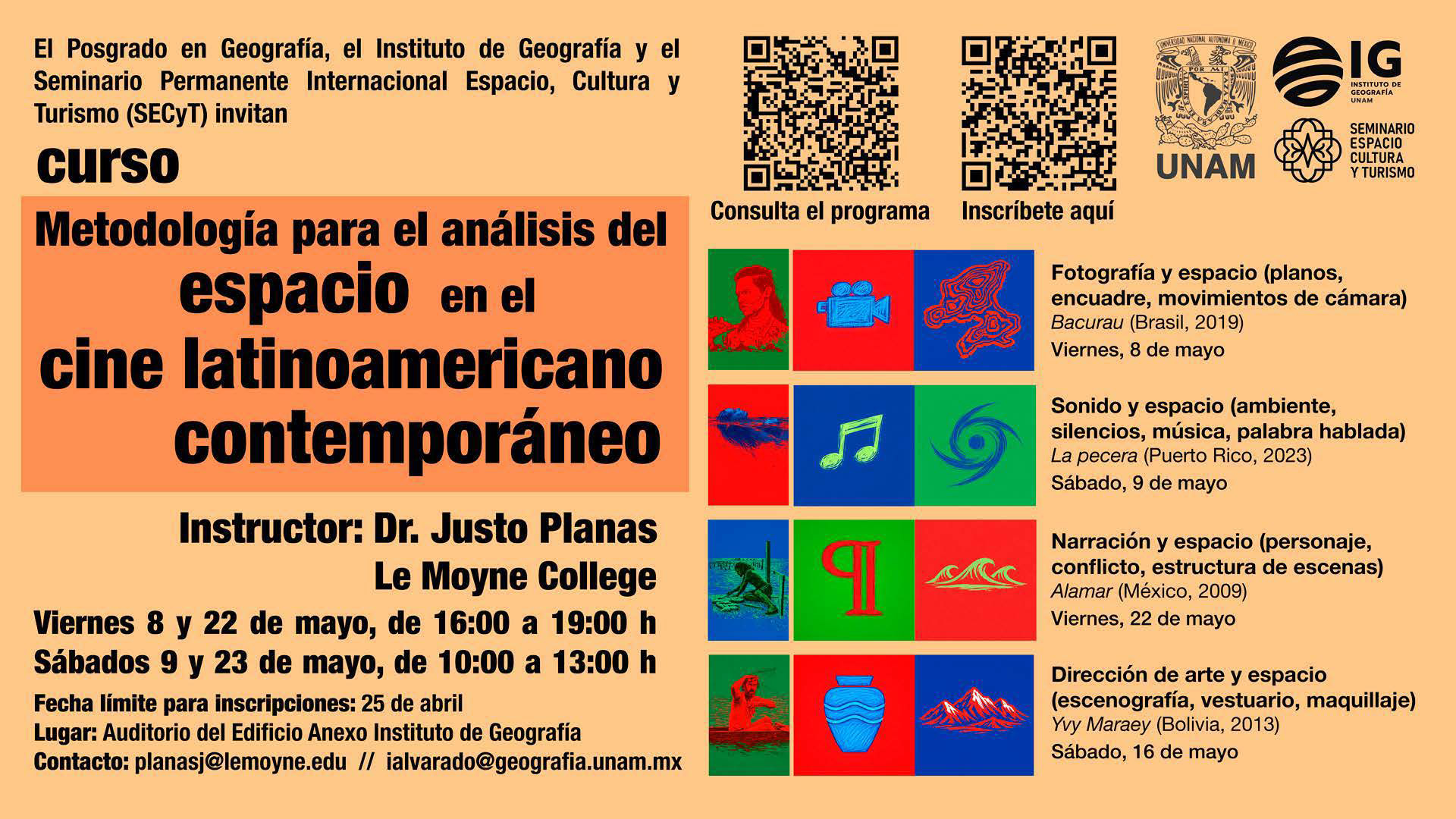
This course introduces students to methods for analyzing space in contemporary Latin American cinema. Through the study of films from diverse Latin American contexts, students will examine how cinematography, sound, narrative structure, and art direction contribute to the construction of audiovisual and social space. The course combines film screenings, in-class discussion, close analysis of selected sequences, and written reflections. By the end of the course, students will be able to apply tools of film analysis to representations of territory, social relations, and contemporary Latin American realities.
Gender and Tourism in Latin American Film
Spanish & Gender and Women – 434, Le Moyne College (Spring 2024)

This course explores cinema’s role in reinforcing or challenging exoticized sexual representations in the Latin America, impacting transnational tourism. Students will analyze how film depict the interplay of tourism and gender, how these portrayals influence global film consumption and how filmmakers navigate tourism’s commodification. Additionally, we will investigate the intersection of race, gender, and ethnicity in these narratives. Through film analysis and anthropological literature, students will gain insights into how cinema and tourism interact in shaping perceptions of Latin America.
Contemporary Latin American Film
Spring 2025: Spanish – 433 & Communication – 433, Le Moyne College
Spring 2023: Spanish – 440 & Communication – 225, Le Moyne College
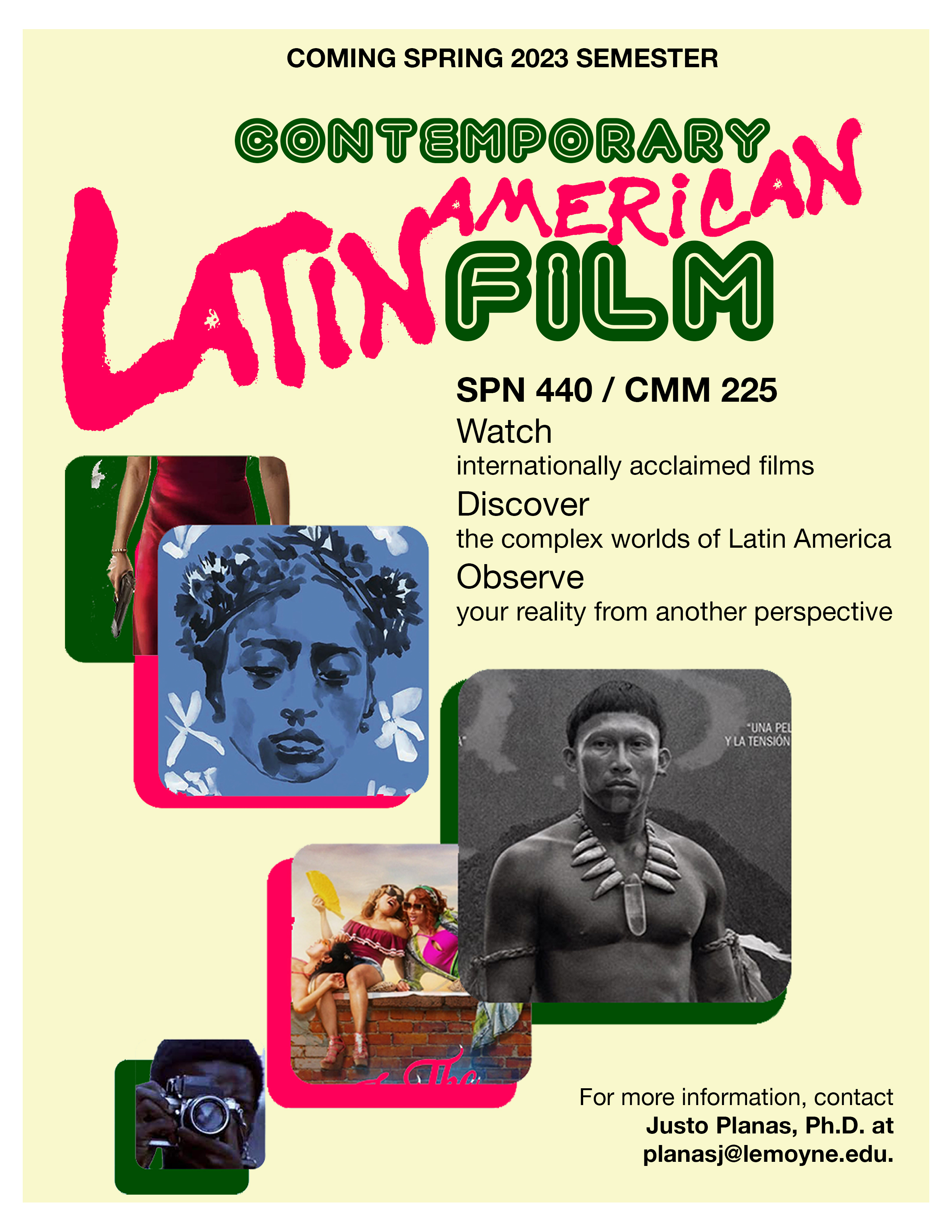
Situated in a region characterized by stark contrasts, encompassing some of the world’s most populous cities alongside vast rainforests, today’s Latin American filmmakers confront pressing global debates, ranging from ecological sustainability to migration, inequality, and violence. This course explores the intersection of Contemporary Latin American cinema with pivotal contemporary issues. Through film discussions and readings, students will contemplate themes such as indigenous cultures and the quest for environmentally sustainable societies, social justice and migration, and the dynamics of race amidst uneven urban development, among others. These films serve not only as a portal to witness the intricacies of Latin America but also as a means for students to view their own reality from a not-so-distant perspective.
Latin American Literature
Fall 2025: Spanish – 431, Le Moyne College
Fall 2023: Spanish – 431, Le Moyne College
This course aims to introduce students to different illustrative styles, cultural expressions, writers, and movements in Latin American literature. It mainly focuses on fundamental themes in twentieth and early twenty-first-century Latin American fiction, particularly the short story. During the course, students will read and analyze key issues related to Latin American fiction in the selected time period. Moreover, secondary sources will be referred to during class activities and written and oral assignments. Close reading of texts and group discussions will be an integral part of this course.
Major Authors: José Martí
Spring 2026: Major Authors: José Martí – 210, Le Moyne College
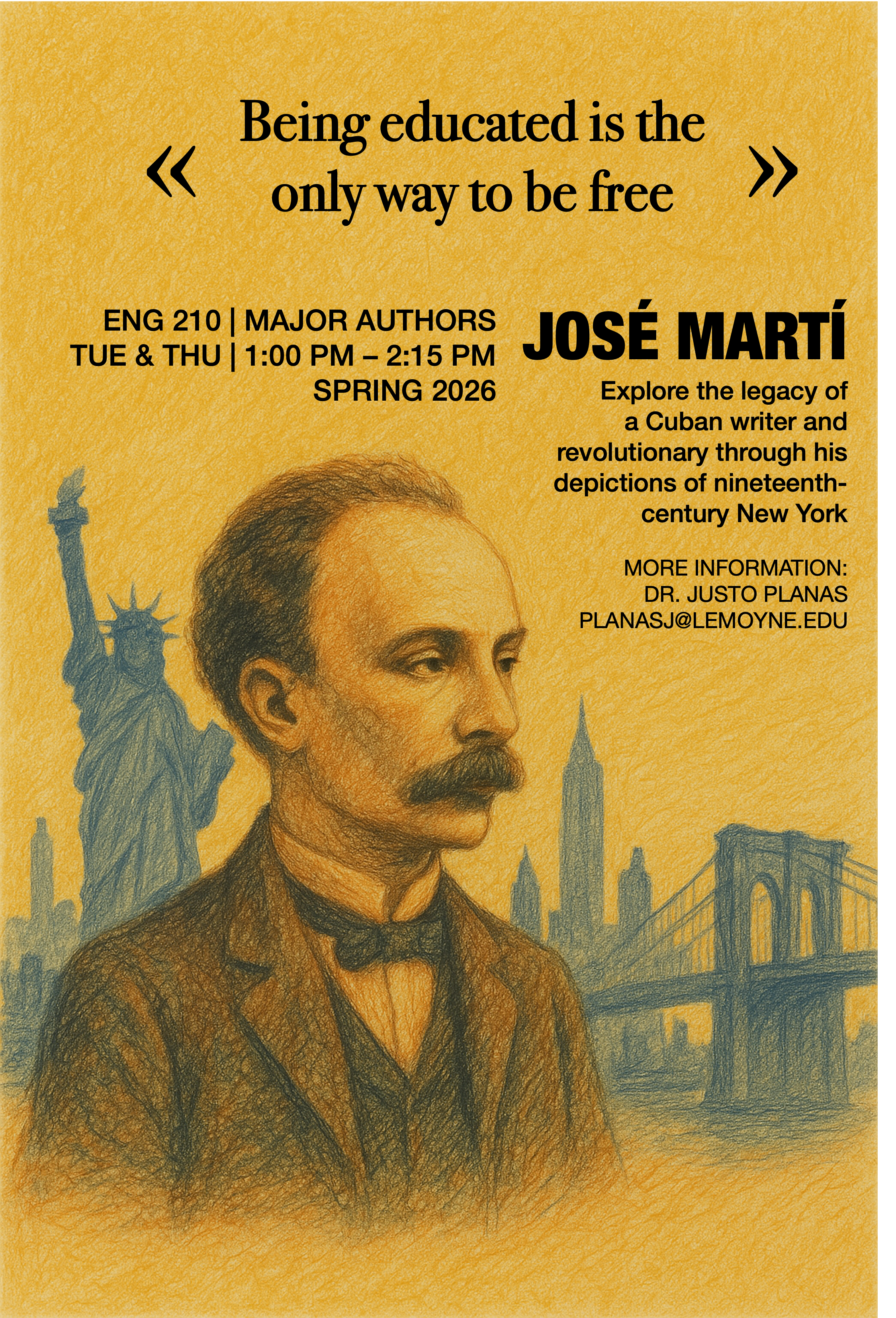
This ENG 210 Major Authors course offers an intensive study of the work of José Martí (1853–1895), a major writer of the nineteenth century whose poetry, essays, journalism, and letters shaped literary culture in the Americas. Through close reading of texts from multiple genres, the course examines Martí’s work in relation to the historical and cultural contexts in which it was produced, including exile, modernity, and transnational exchange. The course places particular emphasis on Martí’s years in New York, where he wrote extensively about U.S. society, literature, and public life for Latin American audiences. Students analyze these writings alongside Martí’s poetry and essays to understand his role as a transnational author and cultural observer.
Latin American Cultures through Telenovelas
Spanish – 412, Le Moyne College (Fall 2023)
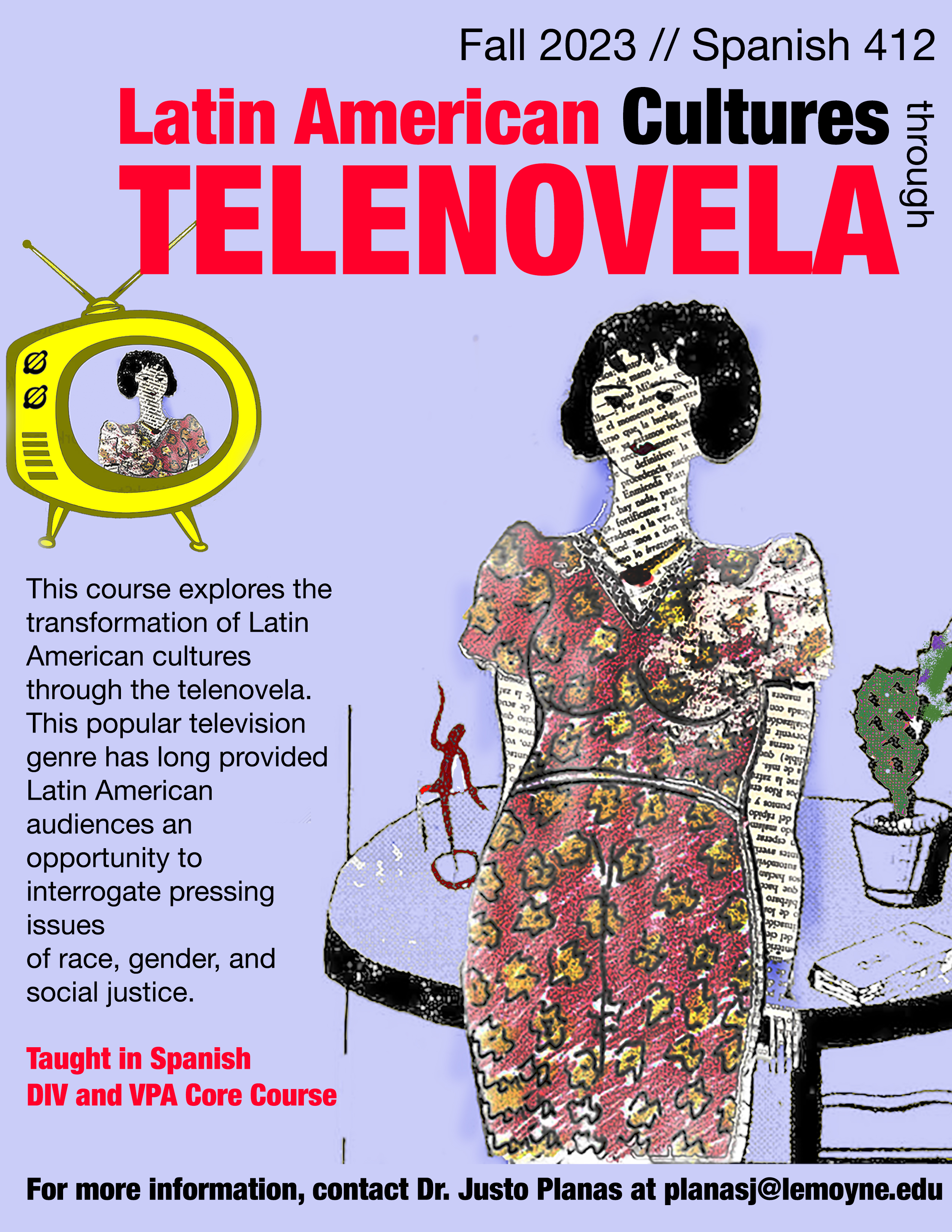
This course explores the transformation of Latin American cultures through issues of race, gender, and social justice, as well as interdisciplinary topics in history, social sciences, politics, and economics. The class will examine how telenovelas introduce these intersectional and interdisciplinary issues to working-class Latin American viewers. Although telenovelas (soap operas) are widely stigmatized in academia, they have served as a long-term referent for the Latin American general public to reflect on pressing social topics. As the philosopher Jesús Martín Barbero asserts, telenovelas have shaped Latin America’s collective imagination of the historical past, present, and future for many decades. A significant part of the course also examines the misrepresentations of diverse communities in Spanish-speaking mainstream media. Additionally, students will engage with literary, visual, and musical products ranging from canonical novels to less prestigious art forms, including narcocorridos, tattoos, and fashion.
Introduction to Literary Studies in Spanish
Spanish – 300, Lehman College (Fall 2020, Spring 2019)
This course is an introductory exploration of literary analysis, with a focus on poetry, narrative, and theater texts. By studying this course, students will develop the ability to recognize and identify the most significant illustrative styles, movements, influential writers, and cultural expressions present in Spanish and Latin American literature.
Spanish Conversation and Composition
Spanish Conversation and Composition II through “Digital Communication”
Spanish – 302, Le Moyne College (Spring 2024)
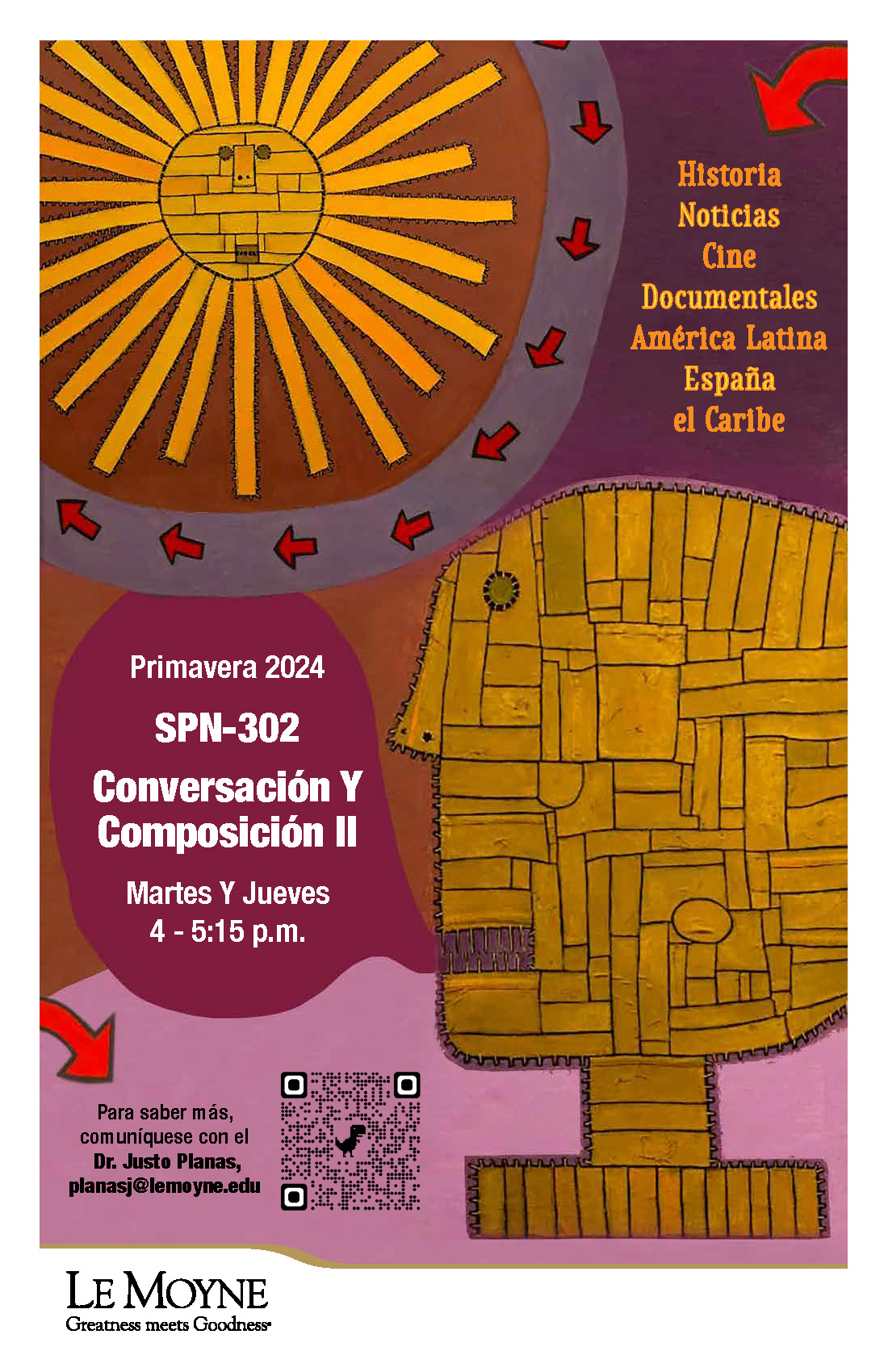
The aim of this course is to enhance proficiency in spoken and written Spanish by reinforcing vocabulary, speech patterns, and promoting fluency. In addition to fundamental grammar and a general curriculum, the course will delve into influential Spanish-speaking digital channels such as YouTube videos, podcasts, newspapers, and other related content, under the theme of “Digital Communication.” This exploration will provide students with a unique insight into how Spanish-speaking communities consume digital media, enabling them to understand debates and trends in the Spanish-speaking digital landscape. Furthermore, students will develop skills that are essential for advanced studies in global cultures, encouraging them to explore the diverse realms within the Spanish-speaking world.
Spanish Conversation and Composition I through “Fantastic Worlds”
Spanish – 301, Le Moyne College (Fall 2023)
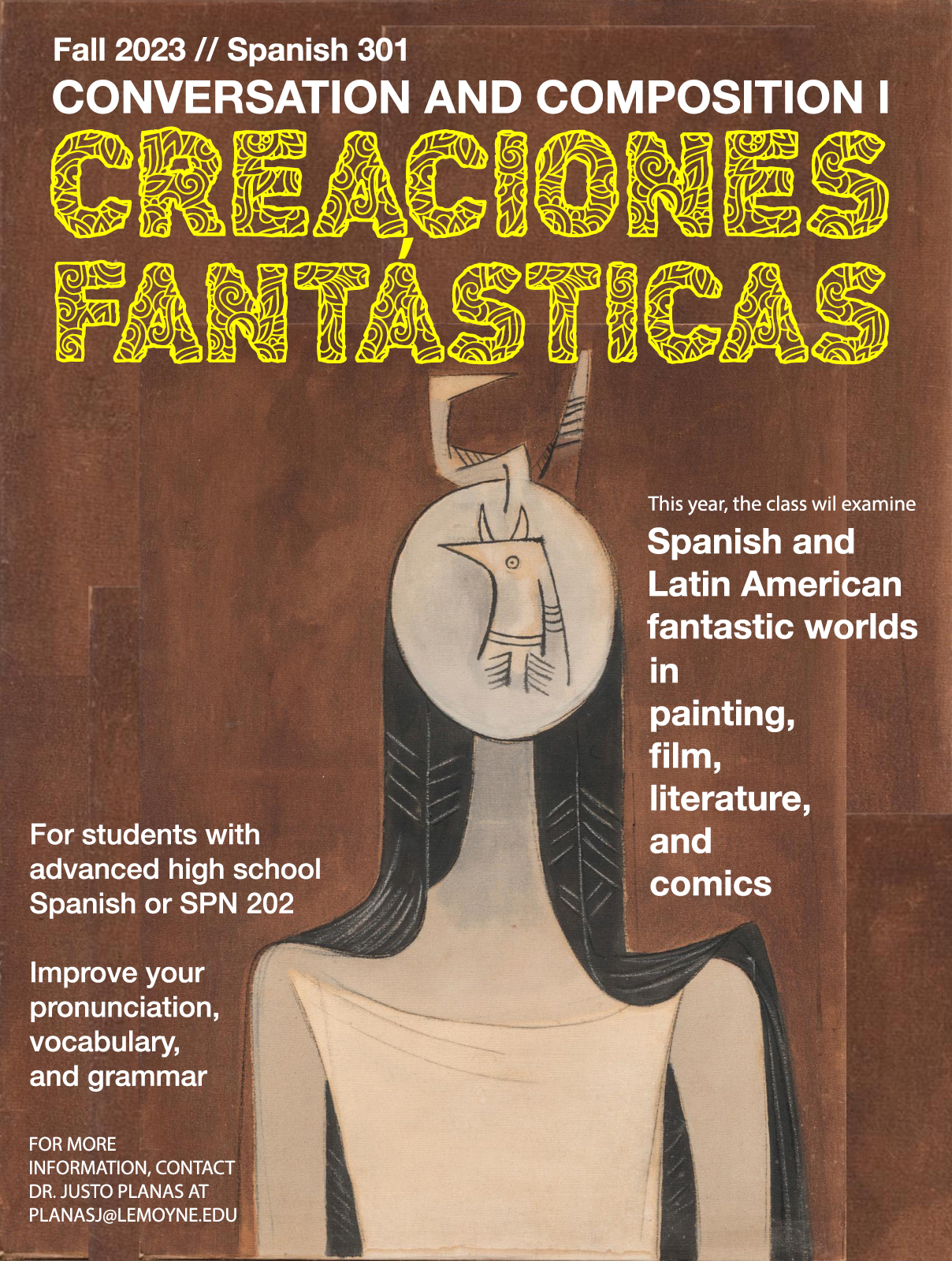
The goal of this course is to improve proficiency in both spoken and written Spanish. This will be achieved by reinforcing and expanding vocabulary and speech patterns while promoting fluency. In addition to covering fundamental grammar and a general curriculum, the course will also incorporate comics, short stories, films, and visual arts related to the course theme, “Fantastic Worlds.” This approach allows for a unique insight into Spanish-speaking communities. Additionally, students will develop the skills necessary to pursue advanced courses in global cultures and explore the diverse realms of the Spanish-speaking world.
Spanish Conversation and Composition I
Spanish – 301, Le Moyne College (Fall 2023)
This course is designed to promote competency in the oral and written use of the Spanish language and to increase fluency by reinforcing and by expanding vocabulary and patterns of speech. Review of basic grammatical aspects will also be integrated as needed.
Spanish Conversation and Composition II
Spanish – 302, Le Moyne College (Spring 2023)
This course is designed to promote competency in the oral and written use of the Spanish language and to increase fluency by reinforcing and by expanding vocabulary and patterns of speech. Review of basic grammatical aspects will also be integrated as needed.
Advanced Spanish Composition and Conversation
Spanish – 322, City College of New York (Spring 2021)
This course aims to improve students’ proficiency in both oral and written communication, by expanding their vocabulary, reinforcing previously learned materials, and exploring patterns of speech. The course will involve discussing and debating current controversial topics, which will help increase fluency. Additionally, students will be required to write several types of essays to apply these skills practically. Basic grammar will be reviewed as needed. This course is designed for bilingual undergraduate students in the School of Education, but it is open to anyone interested. The professor will provide a digital and free version of all the required materials as part of the open pedagogy approach.


